

On the same winding forest roads of Wingst where the Atto 3 proved itself as a practical, punchy compact SUV, its sleeker, faster sibling—the BYD Seal—feels like a different beast entirely. This isn’t a car designed to fit in; it’s designed to take the fight to the Teslas and BMW i4s of the world. And after a day of throwing it into tight corners, stretching its legs on the autobahn, and living with its spaceship-grade tech, I’m convinced: the Seal isn’t just fast—it’s a statement.
Who Is BYD?
If the Atto 3 was your gateway drug to the BYD universe, the Seal is what happens after you’re hooked. BYD, or Build Your Dreams, isn’t quietly sneaking into the EV market anymore. They’re storming in with 1.6 million EVs sold in 2023 and a reputation for doing everything in-house—from semiconductors to software to the famously safe Blade Battery.
Unlike rivals who rely on suppliers for critical EV components, BYD has built a vertically integrated empire. The same battery that powers Tesla models in China now lies beneath the floor of the Seal. In other words, this isn’t a company chasing the future—it’s building it.
BYD Seal Design: Slippery, Sleek, and Seriously Good-Looking
If the Atto 3 turned heads, the Seal makes necks snap. The long wheelbase, low-slung profile, and coupe-like roofline are punctuated by full-width LED lights, flush door handles, and aerodynamic flourishes that wouldn’t look out of place on a Porsche Taycan. There’s an elegance here that feels rare in the sub-€60k EV bracket.
This is BYD proving they can design something aspirational—and they absolutely nailed it.
Interior: Premium, Digital, and Packed with Toys
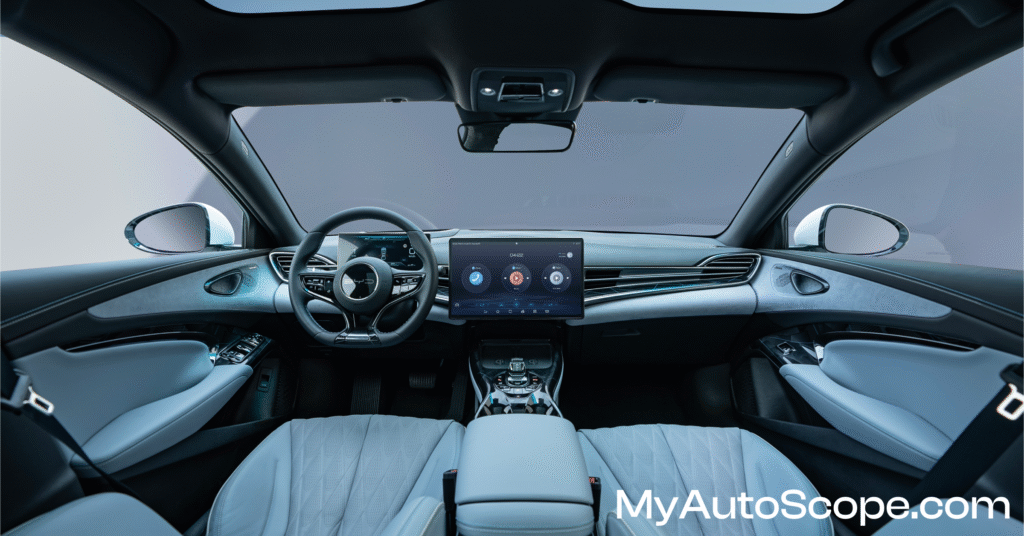
Step inside and you’re greeted with an evolution of the Atto 3’s daring interior. It’s less playful, more mature—think tech-lounge instead of energy-drink laboratory. Materials feel a step up: soft-touch vegan leather, aluminum accents, ambient lighting, and a cabin layout that’s clean and driver-focused.
Yes, the 15.6″ rotating touchscreen is still the center-stage party trick, and it’s joined by a crisp 10.25″ digital instrument cluster. But it’s the details that shine: ventilated seats, wireless charging pads, 12-speaker Dynaudio sound system, and a panoramic sunroof that drenches the cabin in light.
On the Road: Choose Your Fighter
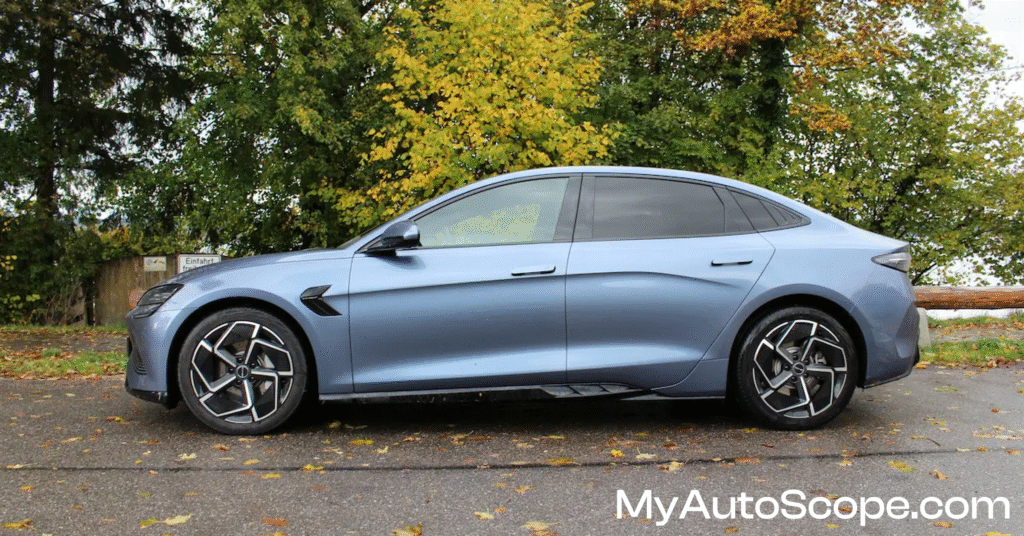
The Seal comes in three trims: Dynamic, Premium, and Performance—and they’re more than just badge dressing.
🔹 Dynamic RWD
- 201 bhp / 310 Nm
- 61.44 kWh battery
- 0–100 km/h: 7.5 sec
- Range: ~510 km (WLTP)
A solid daily driver, this is the base trim—but it’s hardly basic. Feels brisk, quiet, and balanced. The suspension leans soft, soaking up urban roads with confidence.
🔹 Premium RWD
- 308 bhp / 360 Nm
- 82.56 kWh battery
- 0–100 km/h: 5.9 sec
- Range: ~650 km (WLTP)
Here’s your long-distance cruiser. With nearly 100 km more range and faster acceleration, it hits the sweet spot for most drivers. The extra weight does little to hurt agility, and ride comfort remains high.
🔹 Performance AWD
- 523 bhp / 670 Nm
- 82.56 kWh battery
- 0–100 km/h: 3.8 sec
Rocket. Ship. That’s what this variant is. With dual motors and torque that pins you back into the seat, the Seal Performance eats autobahn sprints for breakfast. It’ll make you question whether you need a Porsche Taycan or a Model 3 Performance—especially at this price.
Handling and Ride: Stable at Speed, Soft in Town
Across the board, the Seal’s ride is more composed than the Atto 3. It’s better damped, quieter inside, and more sure-footed in fast bends. High-speed stability is impressive, especially in the AWD version. That said, around town, the suspension can feel a touch firm over bumps, and tight multi-story car parks remind you it’s a long, wide sedan.
Charging & Range: Solid, but Not Class-Leading
With up to 650 km of range, the Seal ranks competitively against the Tesla Model 3 and Hyundai Ioniq 6. Real-world figures, especially in colder weather, put it closer to 520–570 km, depending on variant.
Charging speeds peak at 150 kW DC, which is good—but not bleeding-edge. Expect 10–80% in ~45 minutes. AC charging is capped at 7 kW, which feels like a missed opportunity—especially for home wallbox users.
Safety: Five Stars and Fully Armed
The Seal brings serious safety firepower:
- 9 airbags
- ADAS suite with adaptive cruise, lane centering, blind spot alert
- 360-degree cameras
- 5-star Euro NCAP rating
This thing isn’t just safe—it’s prepared for everything.
BYD Seal: Specs Snapshot
| Spec | Seal Performance (Top Trim) |
|---|---|
| Power | 523 bhp |
| Torque | 670 Nm |
| 0–100 km/h | 3.8 sec |
| Battery | 82.56 kWh |
| WLTP Range | ~650 km |
| Charging (DC Fast) | 150 kW (10–80% in ~45 min) |
| Charging (AC) | 7 kW |
| Drive Type | AWD |
| Boot Space | 400 L (rear only, no frunk) |
| Screen Size | 15.6″ rotatable |
| Price (Europe) | From €45,000 – €53,000 |
Pros ✅
- Stunning design, inside and out
- Ludicrous acceleration in AWD trim
- Comfortable, premium-feeling interior
- Long range with real-world usability
- Strong safety credentials
- Great value versus legacy rivals
Cons ❌
- AC charging capped at 7 kW
- No front trunk
- Some climate and media controls buried in touchscreen
- Rear headroom tight for tall passengers
Verdict: The Electric Car That Doesn’t Ask You to Compromise
The BYD Seal isn’t trying to be everything to everyone—it’s laser-focused on being a stylish, high-performance EV with genuine premium chops. And it largely succeeds. While the Atto 3 impressed as an urban family crossover, the Seal inspires. It’s an electric sedan that feels properly thought out, well-priced, and fun to drive.
BYD didn’t just copy Western automakers—they built something better in key areas. The Seal doesn’t whisper “EV future.” It shouts it.
Should you buy the BYD Seal over a Tesla Model 3 or Hyundai Ioniq 6?
If you want real range, a luxurious cabin, and face-flattening speed without paying BMW money—yes. The BYD Seal is no longer an underdog. It’s a full-blown contender.